Sports
5 Basketball Stretches To Perform To Prevent Injury

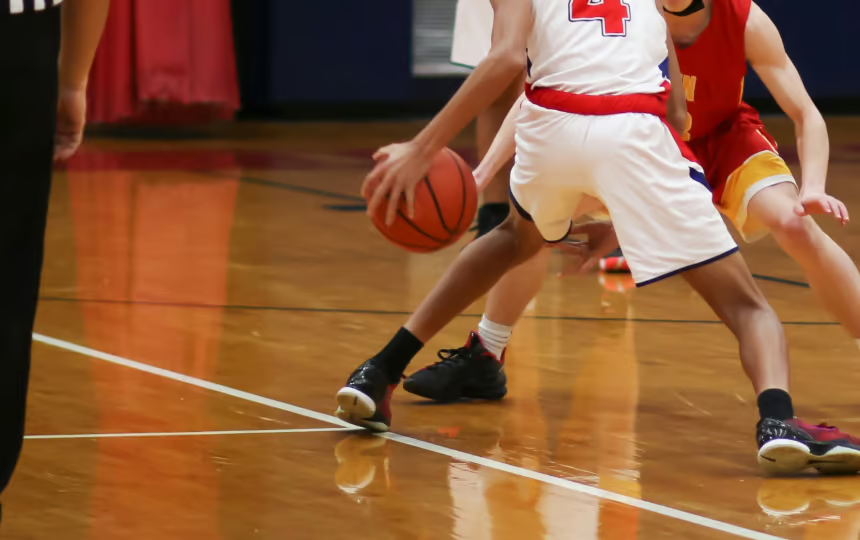
Become More Flexible and Improve Your Game
If you’re someone who’s highly involved in the sport of basketball, one element of your training that you must be sure that you don’t overlook is the stretching component.
Many basketball players are fast to fill up their schedule with practicing basketball drills and then getting into the weight room to strengthen the main muscles that are called into play when performing the sport, but few ever take the time to think about the added benefits that stretching can bring.
Not only is it important to perform stretching as part of your workout because of the fact it will help you bring down your heart rate closer to normal and allow the body to cool down, but stretching afterwards will also help to increase your range of motion.
This is going to be especially important because the greater the range of motion you’re able to move through, the better performance you’ll be able to give.
Those basketball players who have a restricted range of motion will notice that they aren’t able to make as many plays as those who are more flexible.
Finally, stretching is extremely important, as the title of this article suggests, to prevent injuries. Injuries can quickly take you out of the game entirely, so it’s vital that you do what you can to stop this from occurring.
Let’s take a brief look right now at the main stretches that you’ll want to be considering as a basketball player looking to maximize your performance and prevent injury.
Quad Stretches
The first of the stretches is the quad stretch. Each time you lunge forward, whether to receive a pass or start up on a sprint across the court, your quad muscles will be called into play.
Along with them, the hip flexors will also be working whenever you’re running at an accelerated pace. A good quad stretch will help target both of these areas.
To perform the quad stretch, get into a standing position with the butt squeezed and hips pulled upwards and then bend one knee, bringing the foot up to the bum. Hold the foot into the bum as close as possible while thinking of pulling back on the knee.
Be sure however that you keep the knee in proper alignment with the other knee as this is vital to preventing pain from developing due to the stretch and keeping in proper form.
Hold for 30-60 seconds and then switch sides and repeat.
Shoulder Stretches
Moving along, the next stretch that you must be performing is the shoulder stretch. The shoulders of basketball players do have a tendency to get quite tense and tight after doing shot after shot after shot.
If you aren’t stretching them out regularly, there is a very good chance that you will begin to suffer from shoulder pain down the road.
To perform the shoulder stretch, stand upright against a wall and gently place the arm back behind you. From there, lean into the wall and you should begin to feel a slight stretch on the shoulder joint.
Hold this for 20-30 seconds and then switch sides and repeat. Note that you should never feel deep pain while doing this stretch, but rather a gentle pull. If at any point it is pain you feel, that’s a good indication that you’re pushing a little too hard and need to back off slightly before resuming.
Calf Stretches
Next up we have calf stretches. If you’re big into taking jump shots, you’ll definitely want to be including these in your post-workout protocol. Tight calves are very common among many basketball players and this could eventually lead to shin pain down the road.
Calf stretches are quick and easy to perform and can be done at any point during the day.
To perform a calf stretch, place a foot up against the wall until you feel a slight stretch in the calf muscle. From there, lean into the wall ever so slightly, which will deepen the stretch and really have you feeling it.
Pause in this position and then relax. Switch sides and then repeat on the other leg.
Alternatively, you can also stand on a step with the heels just off the edge and then slowly allow your weight to drop downwards, stretching the calves in this manner.
Side Stretches
After you’ve finished your calf stretches, next you need to perform a few side stretches as well. Since you’ll often be turning in various directions throughout the plays, whether to pass a ball, receive the ball, or just outmaneuver an opponent, it’s important that you’re limber in this region.
To stretch out the sides, slowly stand with the feet slightly wider than hip width apart and bend over to one side, with the opposite hand overhead.
Reach sideways as far as possible, pause, and then reverse to the other direction again.
This is another stretch that you don’t want to push too far with – just enough so that you feel a light stretch taking place.
Hamstring Stretches
Finally, don’t forget about your hamstrings. With enough running back and forth along the court, these can also get quite tense and taught over time. To stretch them out, simply lean forwards towards the ground, trying to bring your hands to touch your toes.
Feel the stretch deep within the hamstring muscle, pause, and then come back to a standing position.
Note that this stretch can also be performed in a seated position with the legs extended in front of you and you reaching forwards towards them.
So there you have the main stretches that any basketball player would really benefit from including in their workout program.
Many people often overlook the importance of stretching in terms of making optimal progress with their training routine, so it’s time that you gave it the attention that it deserves.
About Shannon Clark
Shannon Clark has a degree in Exercise Science and is an AFLCA certified personal trainer. She has written on the topics of health, fitness and nutrition for the last 8 years. Her insights are regularly published on bodybuilding, askmen and FitRated.com. FitRated is a leading fitness equipment review site offering fitness insights on equipment, workout plans and weight loss strategies. Check out the latest review of Total Gym XLS!

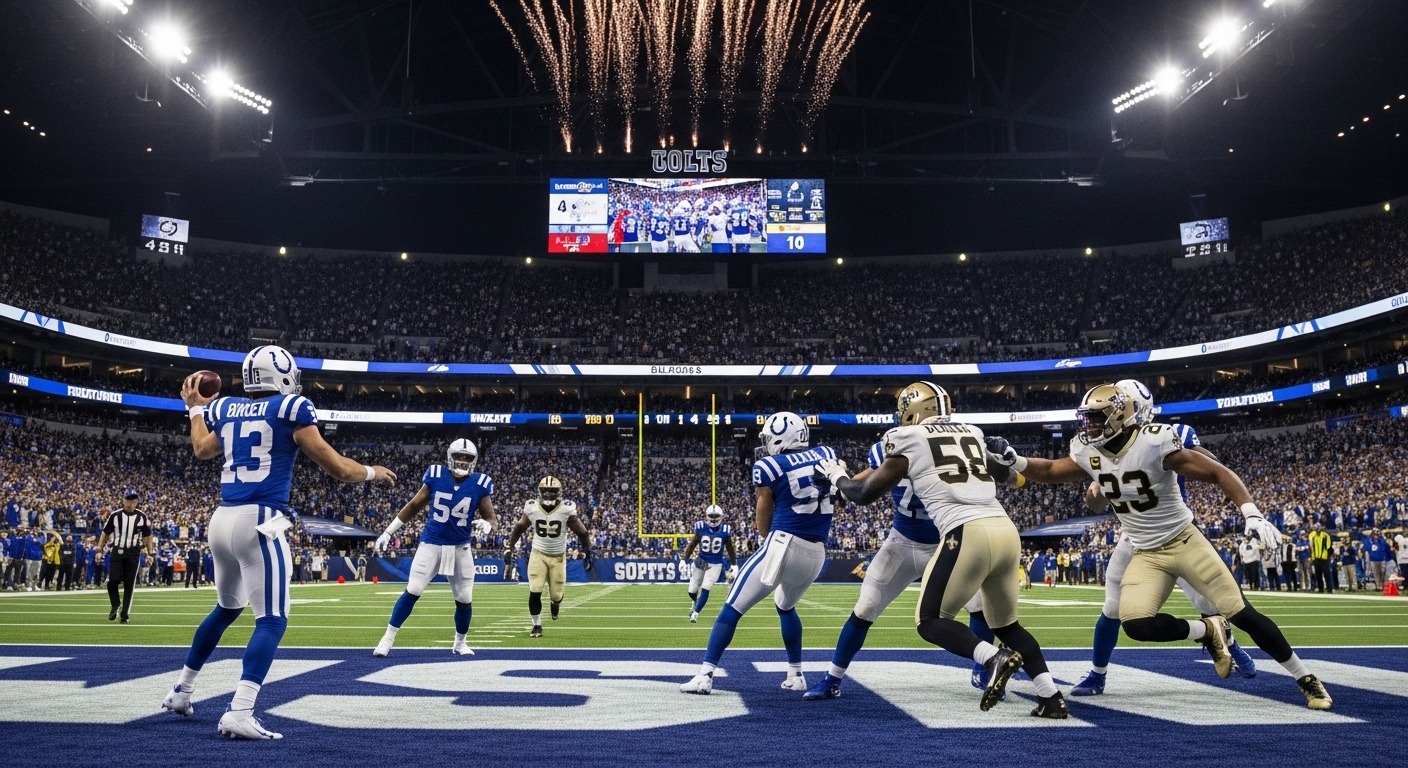
Mark your calendars because February 7, 2010 will mark the start of the infamous Super Bowl Madness! Get out the veggies and dip, but make sure to keep a tab on the number of beers you chug back! As we all know, this full day event can easily lead to unwanted pounds.
The Super Bowl will be held in Miami this year at Dolphin Stadium. The kick off will start at 6:30pm Eastern Time. After a tremendous semi-final fight between the Indianapolis Colts and the New York Jets, and the New Orleans Saints and the Minnesota Vikings, the Colts and the Saints won themselves a spot in the finals.
Both the Colts and the Saints have top-ranked football players, some that have already won a Super Bowl ring in the past, and some that are itching to win their first. With starter quarter backs Peyton Manning of the Colts, and Drew Brees of the Saints, we are bound to see some all around great football. And what about the rookies? Austin Collie from the Colts has amazing speed and needless to say is no sight for sore eyes; and Darren Sharper from the Saints is a ball-hawking safety machine. It will be an ongoing battle between experience and speed. Although the players from the Colts have had much more Super Bowl experience, the Saints have one of the fastest offenses in the NFL. But the Colts also have a defensive line that rely more on speed than size, so the battle between these 2 teams should be legendary.
The half time show for the Super Bowl will headline the legendary rock band The Who, followed by a variety of other great performances. The exposure for a half time show performance is exceptional, and with over 151 million viewers from last year, that number is predicted to increase with over 230 countries broadcasted worldwide.
The Super Bowl for Geeks Guide is another popular feature of the Super Bowl. This is for those that get tuned in solely for the fun, outrageous commercials that are televised throughout the game. CBS has already announced that they sold out all the space they had for advertisers, so you can be guaranteed to be entertained not only by the big game but by all the advertisements as well.

A study of physical demands based on a player’s position
The Physical Demands of the FA Premier League Soccer Player
In Britain an interesting study took place that was designed to evaluate the physical demands of English Football Association (FA) Premier League soccer of three different positional classifications (defender, midfielder and striker).
The English Premier League represents the crème de la crème as it is the top-level soccer league in England and many of its professional players also play for their respective countries in International play and the World Cup. The data collected and analyzed from this study arguably couldn’t have come from a better pool of subjects.
Computerized time-motion video-analysis using the Bloomfield Movement Classification (Motion Analysis of Individual Players in Dynamic Movement Sports) was undertaken on the purposeful movement (PM) performed by 55 players. These 55 players were comprised of 18 defenders, 18 midfielders and 19 strikers. The players were taken from 12 different teams, and all players had a mean number of 36.35 ± 25.21 full international appearances for their respective countries at the time of the study.
The Data
The data was collected during the 2003-2004 season from publicly televised matches (Sky Sports, British Sky Broadcasting Group, UK). An individual PlayerCam throughout the game observed each player. Each player had to have played the full 90 minutes without more than 30 seconds stoppage at any given time.
The Results
The final results of the study were interesting and may provide some useful insight on training for the 3 distinct position types in soccer. Less than half of ‘purposeful movement’ was performed in a forward direction. All the players executed the different types of movement with variations in intensity; they also perform many turns during maneuvers.
Notable differences exist between midfielder, striker and defender:
The Defender
Defenders performed the highest amount of jogging, skipping and shuffling movements and spent a significantly less amount of time sprinting and running than the other positions. As with strikers, defenders fall to the ground the most and are required to get up quickly. The defender especially the center back performs a high amount of jumping (heading the ball), though compared to the striker the defender is more often jumping backwards than forwards. Defenders also need to be strong to compete with the striker.
The Midfielder
Engaged in far less time standing still and shuffling, the midfielder spent the most time running and sprinting. It was previously found that midfield players covered the largest overall distances during matches (O’Donoghue, 1998; Reilly and Thomas, 1976; Rienzi et al., 2000).
It was also shown that there were lower levels of shuffling movements and high levels of possession actions in midfielders. This is in contrast to the strikers who had a high level of possession actions as well and nearly the same amount of sprinting but executed a significantly higher level of shuffling movements than midfielders. This observation may reflect upon the different spatial and time demands of game-play for these positions.
It was also noted that it is important for Midfielders perform vertical jumps well.
The Striker
Strikers may need to be the physically strongest players on the pitch as they were found to be involved in the most physical contact at high intensity. Effectiveness in pushing and pulling activities dealing with the upper body in addition to having the ability to withstand being pushed and pulled is advantageous. Strikers were also seen to have higher levels of sudden stopping at high intensity as well as weaving and slowing more rapidly. These activities produce shearing forces on the lower limbs and appropriate strength training and prehabilitation practices should be followed.
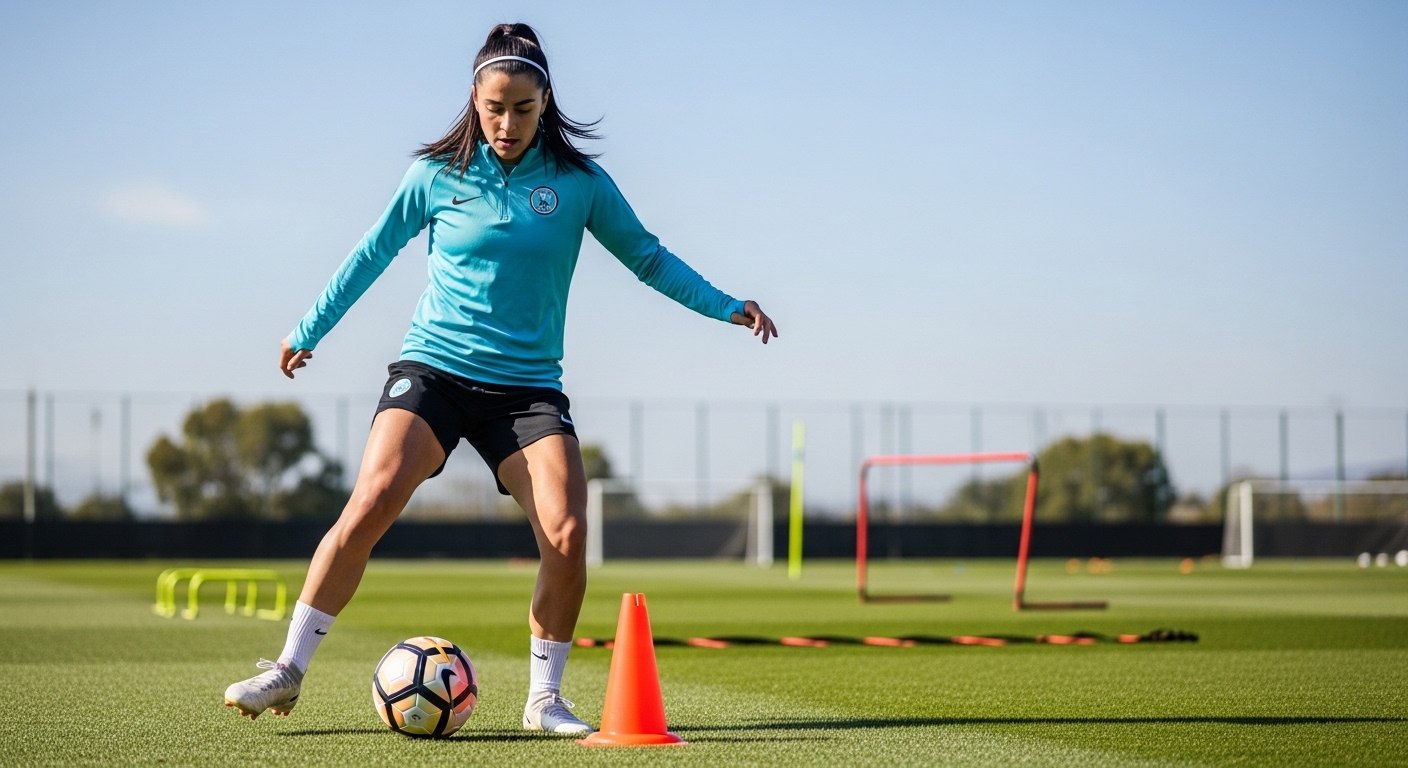
Soccer (or more commonly known as “football”) is easily one of the most popular sports in the world with a massive, global base of enthusiasts and practitioners of all ages.
For the longest time (and still today) a lot of the training done for soccer (aside from skills) have been centered around aerobic conditioning, while overlooking important aspects like, strength, speed and power, agility and flexibility. Most players on the pitch run a great deal in the game (estimates of between 11-13km during a 90 minute game), so endurance training is very important but should not be done exclusively at the expense of the other aspects of conditioning.
Train for the Position
Positions in soccer can be broken down or simplified into 3 groups. These groups are, Strikers, Midfielders, and Defenders. Each of these positions has different training requirements above and beyond the normal endurance regimen.
The idea that each position on the field requires different attention is a relatively new one and based on a study in England done on 55 top level professional players from the FA Premier League over the 2003-2004 season. Findings from this study showed that the 3 different groups of players do and would benefit from more specific attention on the various aspects of training based on their game play duties.
The Striker
Of all the players on the field, the striker needs to be the strongest physically as they are more often involved physical contact, dealing with pulling and pushing as well as being pushed and pulled during challenges with defending players. Good upper body strength is an asset to the Striker.
Strikers also have to start and start suddenly with explosive power more than most other players and this force causes a great deal of stress on the lower limbs so appropriate strength training and prehabilitation is beneficial.
The strength-training program for the striker (and for outfielders in general) is built around compound exercises. Examples are: squats, lunges, pushups, chin-ups, etc). Another important concept to consider is balancing opposing muscle groups such as hamstrings against quadriceps; an imbalance in strength could increase the chance of injury.
The Midfielder
Of all the players on the field, the Midfielder traditionally does the most running and jogging. Endurance training is obviously something to focus on, but using interval-training methods. The midfielder is also required to perform vertical jumps for heading. The midfielder will also benefit greatly from strength training as outlined for the striker, but to a lesser degree of focus.
The Defender
Perhaps second only to the striker, the defender (especially the central defender) needs to focus on strength in order to combat challenges from those strong strikers. Defenders also go to the ground a lot in the game, so training for getting up quickly and explosively is a benefit to the defender. A defender’s vertical is also important in order to challenge strikers for headers.
All Positions and Endurance
Developing a solid soccer fitness program should include working on a strong aerobic base, as the game for outfield players places a great demand on the player’s cardiovascular system and muscular endurance.
That being said, perhaps just doing blanket endurance training such as running isn’t the best overall approach as a lot of the outfield player’s movement isn’t constant, but relies on changing direction, shuffling, starting and stopping and sudden bursts of speed (sprinting) all of these done at various levels of intensity.
Bringing interval training into your fitness regimen will provide better results than longer duration or low intensity training will give. Interval training incorporates a mixture of high and low intensity training, this more closely emulates the physical environment a player would be faced with in a game situation.
Benefits for strength training
-
- Resistance to injury
-
- Better explosive power
-
- Greater balance, stability, and agility
-
- Quicker recovery
-
- Competing in challenges with other players
Speed & Agility
Every player on the field will benefit from greater speed and agility. The pace of the game, especially at the professional levels is getting faster and faster all the time. Being able to get the ball first is very important.
Most professional players are required to perform a 30m sprint in 4.0 seconds. That’s very fast. You are doing well if you can do it in 5 seconds.
When you combine strength with speed you get power. Powerful players are forces to be reckoned with.
Training for power, you should consider movements that include explosive or sudden power moves like, power cleans, and jump squats, as well as plyometrics.
To build speed endurance, you should bring these exercises together in a circuit routine with high intensity intervals. Alternate power drills for lower body and upper body with plyometrics as intervals. Conclude your workout with some sprinting and agility drills.
Flexibility for the Soccer Player
A healthy range of motion can be extremely beneficial. Past and present models for stretching (pre-exercise stretching) have been proven to be relatively useless as well as potentially increasing the incidence of injury.
Doing dynamic warm-up drills like freestanding squats, butt kickers, arm circles, walking lunges before training or a match is far more effective. After the game is over then cool down with some stretching (try using your own muscular effort to hold the position).
In the end knowing your position and its demands will help you mold a training regimen that will help you improve your physical game.
-
 Sports2 hours ago
Staying Safe On Inline Skates
-
 Health & Wellness1 hour ago
How Your Health and Fitness is like Short Track Speed Skating
-

 Entertainment1 hour ago
What’s Your Favorite Sport?
-

 Sports1 hour ago
The Physical Demands of the Soccer Player
-

 Lifestyle1 hour ago
Can Music solve America’s obesity problem?
-
 Health & Wellness2 hours ago
Ski Fitness Fundamentals!
-

 Lifestyle2 hours ago
Home Exercises for People with Lung Conditions
-
 Sports1 hour ago
Sport Specific Training: Soccer