Connect with us

Technology

Humanilex: How It Enhances Communication for Everyone

Published

on

Humanilex: How It Enhances Communication for Everyone

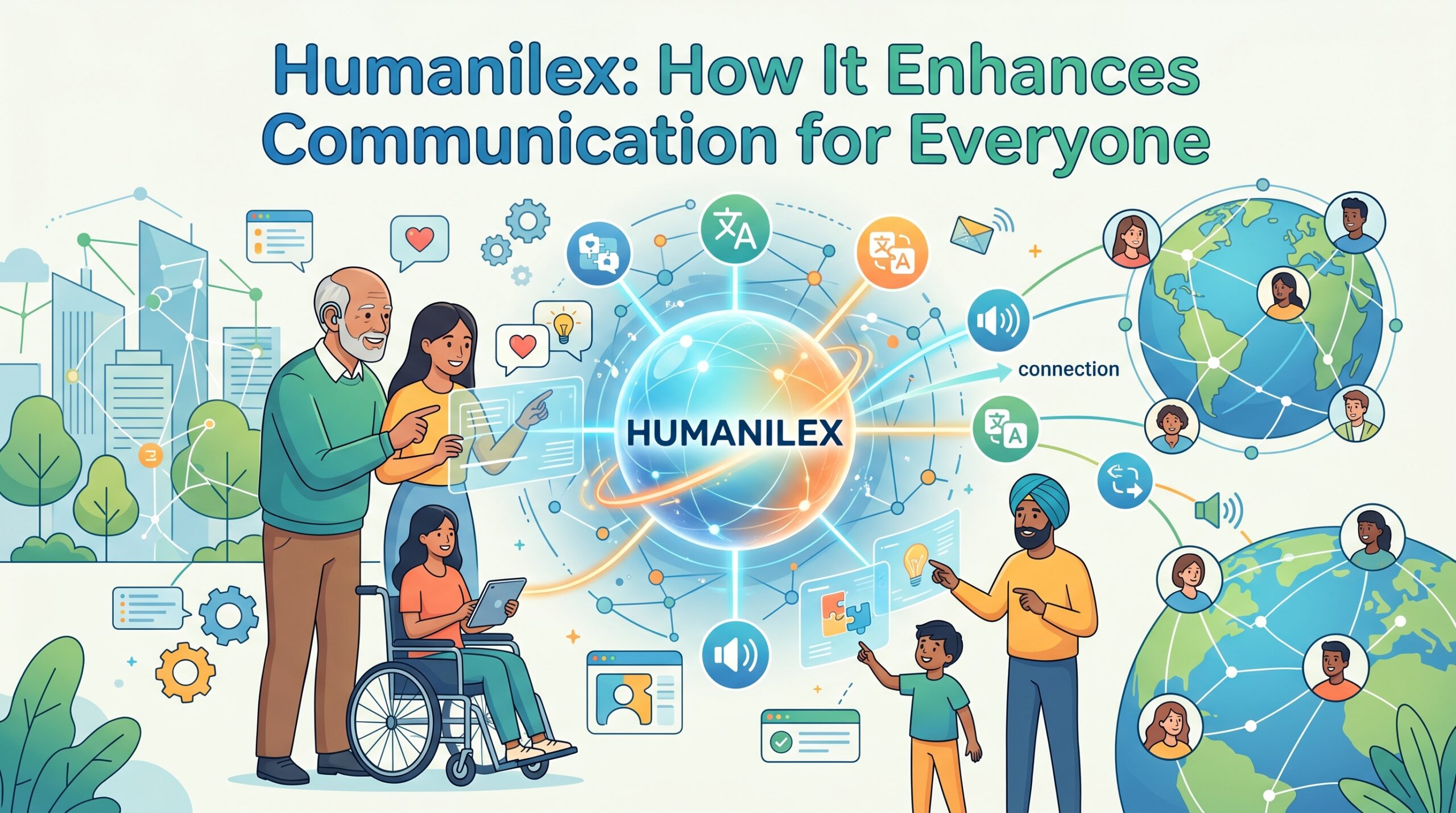
Communication is at the heart of human interaction. Whether we’re sharing ideas, expressing emotions, or collaborating on projects, effective communication plays a vital role in our daily lives. Enter Humanilex—a groundbreaking tool designed to simplify and enhance how we connect with one another. Imagine a world where barriers dissolve, misunderstandings are minimized, and everyone can express themselves effortlessly. That’s the promise of Humanilex. Let’s dive deeper into what this innovative approach entails and how it reshapes our communication landscape for the better.

What is Humanilex?

Humanilex is a groundbreaking approach to communication that bridges gaps between individuals. It emphasizes clarity and inclusivity, ensuring everyone can express themselves effectively.

At its core, Humanilex focuses on understanding the nuances of language. It incorporates various linguistic elements, making communication more accessible for diverse audiences. This adaptability allows for smoother interactions in both personal and professional settings.

With Humanilex, traditional barriers are dismantled. It prioritizes empathy and active listening, fostering meaningful dialogues among people from different backgrounds. The goal is not just to convey messages but to create genuine connections.

By redefining how we communicate, Humanilex empowers users with tools for better expression. As conversations become more engaging and less ambiguous, relationships deepen across communities—creating a rich tapestry of shared experiences and understanding.

Understanding Humanilex: Definition and Purpose

Humanilex is a transformative approach to communication. It focuses on bridging gaps between diverse individuals and groups.

At its core, Humanilex emphasizes clarity and empathy. This framework encourages users to express their thoughts while considering the perspectives of others. By fostering understanding, it aims to create more meaningful dialogues.

The purpose of Humanilex goes beyond mere exchange of information. It seeks to enhance emotional connections and build trust among communicators. This method recognizes that language can sometimes fail us, especially in complex discussions.

Through the lens of Humanilex, interactions become more inclusive and effective. People feel heard, valued, and respected in conversations that matter most.

Benefits of Using Humanilex in Communication

Using Humanilex can transform the way we communicate. It fosters clarity by simplifying complex ideas into understandable language. This ensures that everyone, regardless of their background, can grasp the message easily.

Another significant advantage is inclusivity. Humanilex bridges gaps between diverse groups, making conversations more accessible for non-native speakers and those with different educational levels.

Additionally, it enhances empathy in communication. By focusing on human experiences and emotions, messages resonate on a deeper level. This connection encourages more meaningful interactions.

Moreover, utilizing Humanilex reduces misunderstandings and misinterpretations. Clearer communication leads to better collaboration in both personal and professional settings.

Implementing this approach cultivates patience among communicators. As individuals strive to express themselves clearly while considering others’ perspectives, they become more mindful listeners too!

How Humanilex Can Be Used in Different Settings

Humanilex can be utilized in various environments, enhancing interactions across diverse groups. In educational settings, teachers can employ it to simplify complex concepts for students of all ages. This fosters better understanding and engagement.

In corporate spaces, Humanilex streamlines communication between teams. It breaks down barriers that often hinder collaboration. Colleagues can articulate ideas more clearly, leading to improved productivity.

Healthcare professionals also benefit from Humanilex by using it during patient consultations. Clearer explanations ensure patients grasp their treatment options fully.

Community organizations leverage this tool too. By facilitating discussions among members with different backgrounds, they promote inclusivity and shared understanding.

Even social media platforms are integrating Humanilex principles to foster healthier online dialogues. The result is a space where users communicate effectively without misunderstandings or conflicts arising frequently.

Each setting reveals the versatility of Humanilex as an essential communication enhancer for everyone involved.

Real-life Examples of Successful Implementation of Humanilex

In various sectors, Humanilex has transformed communication dynamics. For instance, a healthcare facility adopted this approach to improve interactions between doctors and patients. By simplifying medical jargon, patients felt more informed and engaged in their treatment plans.

Another success story comes from educational institutions. A university integrated Humanilex into its curriculum to assist students with diverse language backgrounds. This not only fostered inclusivity but also enhanced collaboration among peers.

Businesses have also seen the benefits of Humanilex. A tech startup utilized it during product development meetings, allowing team members from different disciplines to share ideas without confusion or misinterpretation. The result? Faster innovation cycles and improved project outcomes.

These examples highlight how embracing Humanilex can lead to effective communication across various fields, breaking down barriers and fostering understanding among individuals with differing backgrounds or expertise levels.

Challenges and Limitations of Using Humanilex

Despite its many advantages, Humanilex faces several challenges.

One significant hurdle is the varying levels of digital literacy among users. Not everyone may feel comfortable navigating technology or understanding the nuances of Humanilex tools.

Another limitation lies in context-specific communication. Humanilex might not fully address all cultural differences or regional dialects, which can lead to misunderstandings.

Moreover, reliance on automated systems can sometimes hinder genuine human interaction. While efficiency is improved, the emotional and personal touch often found in face-to-face conversations may be lost.

There are issues related to privacy and data security. Users must trust that their information remains confidential while using these platforms.

These factors highlight that while Humanilex offers innovative solutions for enhancing communication, it does require careful consideration and ongoing refinement to maximize its potential benefits.

Future Implications of Humanilex on Communication

The future of communication is evolving with Humanilex at the forefront. This innovative tool has the potential to bridge gaps in understanding across diverse populations. As globalization continues, effective communication becomes essential.

Humanilex may pave the way for more inclusive dialogues. By simplifying complex language and concepts, it allows individuals from various backgrounds to engage meaningfully. Imagine a world where everyone can express themselves clearly.

Technology will play a significant role in this transformation. With advancements in AI and machine learning, personalizing Humanilex could enhance its effectiveness even further. Tailoring communication tools to meet specific needs can lead to richer interactions.

The educational sector stands to benefit immensely as well. Students equipped with Humanilex resources may find it easier to collaborate on projects and share ideas without language barriers holding them back.

In professional environments, clarity often leads to better teamwork and productivity. Embracing Humanilex could revolutionize collaboration across industries globally.

Conclusion

Humanilex represents a significant shift in the way we think about communication. It’s all about inclusivity and clarity, bridging gaps that often exist between individuals due to language barriers or differences in understanding. As we’ve seen, this innovative approach can enhance interactions across various settings—be it professional environments or personal conversations.

The benefits of adopting Humanilex are numerous; improved comprehension leads to better relationships and more effective collaboration. Real-life examples show its successful implementation, proving that when people understand each other clearly, wonderful things happen.

However, challenges remain. Not every individual may be familiar with Humanilex yet. Some might find it hard to adapt to new methods of communication quickly. Yet these hurdles do not overshadow the potential positive impacts on our everyday exchanges.

As technology evolves and human connection becomes increasingly vital, embracing tools like Humanilex can reshape how we engage with one another moving forward. By prioritizing clear and inclusive communication strategies today, we set the stage for even richer dialogues tomorrow—an exciting prospect indeed!

Continue Reading
Click to comment

Leave a Reply

Your email address will not be published. Required fields are marked *

Technology

Duaction: The Power of Dual Processes in Decision Making

Published

on

By

Duaction: The Power of Dual Processes in Decision Making

Decision making is a fundamental part of our daily lives. From small choices like what to have for breakfast to significant ones such as career changes, the process can often feel overwhelming. Enter duaction—a fascinating concept that highlights how we navigate these decisions through two distinct mental processes: intuitive and analytical thinking.

Imagine your brain as a dynamic duo working in harmony. One side reacts quickly, drawing on emotions and instincts, while the other carefully weighs options with logic and analysis. By understanding how these dual processes function together, we can elevate our decision-making skills and make more informed choices. Are you ready to explore the power of duaction? Let’s dive into this intriguing world where intuition meets reason!

What is Duaction?

Duaction is a concept that melds two ways of thinking into a cohesive approach to decision making. It combines intuitive and analytical processes, allowing individuals to tap into their instincts while also engaging in careful reasoning.

This duality enhances our ability to navigate complex choices. Instead of relying solely on gut feelings or extensive analysis, duaction encourages a balanced perspective.

The interplay between these systems can lead to more informed decisions. When faced with uncertainty, drawing from both intuition and logic becomes essential for clarity.

By recognizing how these processes work together, we empower ourselves to make better choices across various aspects of life—from personal dilemmas to professional challenges.

Intuitive and Automatic Decision Making

Intuitive and automatic decision making is a fascinating aspect of how we navigate daily choices. This process often occurs without our conscious awareness, functioning like an internal GPS guiding us through life’s myriad paths.

Think about those split-second reactions when you catch a falling object or choose your meal at a restaurant. These instinctive choices rely on prior experiences and emotions stored in the brain. They are quick, efficient, and often remarkably accurate.

This system draws from patterns learned over time, allowing for rapid responses to familiar situations. It’s as if your mind has developed shortcuts that save energy while still delivering effective outcomes.

However, this automaticity can sometimes lead us astray. Biases may creep in unnoticed, impacting judgment subtly yet significantly. Understanding the balance between intuition and reasoning becomes vital for navigating complex decisions effectively.

Analytical and Deliberative Decision Making

Analytical and deliberative decision-making involves a structured approach to problem-solving. This method relies on critical thinking, evaluating evidence, and weighing options carefully.

When faced with complex choices, individuals engage their analytical minds. They gather data, assess risks, and anticipate consequences. This systematic process can lead to more informed outcomes.

Deliberation adds another layer by allowing time for reflection. It encourages considering various perspectives and potential impacts before reaching a conclusion.

This combination fosters thorough understanding rather than impulsive reactions. People tend to feel more confident in their decisions when they have taken the time to analyze all factors involved.

In scenarios where stakes are high or outcomes uncertain, this dual approach proves particularly valuable. Emphasizing logic over emotion helps navigate challenging situations effectively while minimizing mistakes driven by bias or haste.

The Benefits of Incorporating Both Systems in Decision Making

Incorporating both intuitive and analytical systems into decision-making enhances our overall effectiveness. Each approach brings unique strengths, creating a well-rounded perspective.

Intuitive thinking allows for quick judgments based on experience. It can be particularly useful in fast-paced environments where time is limited. This instinctual response often leads to creative solutions that structured analysis may overlook.

On the other hand, analytical thinking digs deeper into details. It fosters thorough evaluation of options, weighing pros and cons meticulously. This method helps mitigate risks associated with impulsive choices.

By balancing these two processes, individuals can harness the speed of intuition while ensuring their decisions are grounded in logic. The synergy between duaction empowers us to navigate complex situations with confidence and clarity.

Embracing both pathways not only improves decision quality but also promotes adaptability in an ever-changing world.

Examples of Dual Process Theory in Real Life

Dual process theory can be observed in daily choices. Think about a time when you quickly decided what to eat versus the hours spent selecting a new car. The first choice ran on intuition, while the latter required careful analysis.

Consider driving. You rely on automatic responses for familiar routes but engage your analytical side when navigating through an unfamiliar city.

Social situations often highlight this dynamic too. When meeting someone new, you might form an immediate impression based on instinctual judgments while also evaluating their opinions and behavior more critically as the conversation progresses.

Shopping offers another clear example. Impulse buys occur without much thought, driven by emotions or advertisements, whereas purchasing a house involves thorough research and weighing various factors such as price and location. This interplay of rapid decisions and thoughtful reasoning shapes our everyday experiences significantly.

Overcoming Biases with Dual Process Thinking

Biases often cloud our judgment, leading to decisions that may not reflect reality. By harnessing dual process thinking, we can counteract these biases more effectively.

The intuitive system acts quickly but can be prone to errors. It’s essential to recognize when this automatic response kicks in. Awareness allows us to pause and reconsider our choices.

Shifting into the analytical mode enables deeper reflection on our thoughts. This deliberate approach requires effort but helps unearth assumptions driving our decisions.

By alternating between these two systems, we cultivate a healthier decision-making environment. It encourages questioning and challenges preconceived notions.

Incorporating both processes fosters a balanced perspective, opening pathways for better outcomes in various aspects of life—from personal relationships to professional dilemmas. Each decision becomes an opportunity for growth rather than a mere reaction influenced by bias.

Embracing the Power of Dual Processes for Better Decision Making

Embracing duaction can transform how we make decisions. By harnessing both intuitive and analytical processes, we create a balanced approach to problem-solving.

Intuition often provides quick insights based on experience. It allows us to respond rapidly in situations where time is critical. However, relying solely on gut feelings can lead to impulsive choices.

Analytical thinking complements intuition by encouraging thorough evaluation of options. This method requires patience and careful consideration but leads to more informed outcomes.

Combining these two systems fosters creativity while minimizing the risk of bias. When faced with complex issues, switching between intuition and analysis enables deeper understanding.

Cultivating awareness of our thought processes enhances decision-making skills. Practicing this duality in everyday choices empowers individuals to navigate challenges effectively and confidently without feeling overwhelmed by uncertainty or pressure.

Conclusion

Decision-making is an intricate process, shaped by both intuition and analysis. Embracing the concept of duaction allows individuals to harness the strengths of dual processes, leading to more balanced and informed choices.

By recognizing when to trust our gut feelings and when to engage in deeper thought, we can navigate complex situations with greater confidence. The synergy between intuitive and analytical thinking not only enhances personal decision-making but also fosters better outcomes in professional environments.

As we continue to explore this powerful approach, integrating both systems into our daily lives can lead us toward clearer paths and smarter decisions. Understanding and applying duaction opens doors for improved judgment that benefits everyone involved.

Continue Reading

Technology

PXLess: The Future of Design Without Pixels

Published

on

By

PXLess: The Future of Design Without Pixels

In a world increasingly driven by technology, the way we design is evolving at an unprecedented pace. Enter PXLess—a bold concept that promises to redefine our creative landscape. Imagine a realm where designs are no longer constrained by pixels, opening up endless possibilities for artists and designers alike. As digital experiences become more immersive, understanding this shift is crucial. Let’s dive into what PXLess means for the future of design and why it might be the game-changer we’ve all been waiting for.

What is PXLess?

PXLess is an innovative approach to design that transcends traditional pixel-based frameworks. It emphasizes fluidity and adaptability, redefining how we perceive visual elements in the digital realm.

Instead of relying on fixed pixel dimensions, PXLess leverages scalable units like vectors and flexible layouts. This allows designs to seamlessly adjust across different devices and screen sizes. The result? A more inclusive user experience.

By eliminating pixels from the equation, designers can focus on creating visually stunning work without being confined by rigid structures. This method champions creativity while enhancing functionality.

As technology evolves, so does our understanding of design principles. PXLess represents a shift towards a more dynamic future where aesthetics meet practicality in unprecedented ways.

The limitations of pixels in design

Pixels have long been the building blocks of digital design. They provide a familiar framework for creating visuals, but they come with inherent limitations.

One major drawback is resolution dependency. Designs created at one size may not translate well across different devices or screen sizes. This leads to blurry images or awkward layouts when scaling occurs.

Additionally, pixels can restrict creativity. Designers often find themselves confined within a grid system that prioritizes uniformity over innovation. This rigidity stifles experimentation and unique expression in visual storytelling.

The color depth offered by pixel-based designs can also be problematic. When working with gradients or shadows, subtle differences often get lost in translation due to limited pixel representation.

As technology evolves toward more immersive experiences like virtual reality and augmented reality, the reliance on pixels feels increasingly outdated. The need for flexibility and adaptability has never been more apparent in design practices today.

How PXLess works and its benefits

PXLess operates on the principle of using scalable vector graphics instead of traditional pixel-based designs. This approach allows for infinite resolution without compromising quality. Designers can create assets that look sharp on any screen size, whether it’s a smartphone or a large monitor.

One major benefit is flexibility. PXLess enables smoother scaling and manipulation, allowing designers to adjust components easily without losing clarity. This saves time in the design process.

Additionally, PXLess promotes faster load times on websites and applications. With smaller file sizes compared to pixel-heavy images, users experience seamless interactions.

Another advantage is consistency across devices. Designs remain uniform regardless of resolution changes or display settings, enhancing user experience significantly.

Embracing PXLess also supports sustainability efforts in digital design by reducing data consumption associated with high-resolution images. The impact this has aligns well with eco-friendly trends in technology today.

Real-life examples of PXLess design

Real-life applications of PXLess design can be found across various industries. For example, many tech companies are now utilizing vector graphics instead of traditional pixel-based images. This shift allows their logos and branding materials to scale seamlessly on any device.

In the world of web design, platforms like Figma and Adobe XD have started embracing PXLess methodologies. Designers create layouts that adapt fluidly to different screen sizes without losing quality or clarity.

Another notable instance is in mobile app development. Many apps now employ responsive designs that prioritize flexibility over fixed dimensions, ensuring an optimal user experience regardless of the user’s device.

Even fashion brands are getting in on the trend by using digital fabric prints created through generative algorithms. These patterns maintain their sharpness at any size, offering a fresh take on textile design without being constrained by pixels.

The impact of PXLess on the design industry

The introduction of PXLess is shaking up the design industry in profound ways. Designers are now free from the constraints of pixels, allowing for more fluid and organic shapes. This paradigm shift encourages creativity to flourish without rigid boundaries.

With PXLess, responsiveness becomes easier. Designs adapt seamlessly across various devices and screens, enhancing user experience significantly. It opens doors for a new wave of interactive designs that feel natural and engaging.

Moreover, collaboration among teams has improved dramatically. Designers can share concepts without worrying about pixel perfection. This fosters innovation as ideas evolve rapidly in an agile environment.

Clients benefit too; they receive personalized experiences tailored to their preferences rather than static visuals confined by pixel limitations. The ripple effect is undeniable—PXLess not only changes how designers think but also redefines what’s possible within the digital landscape.

Challenges and concerns surrounding PXLess

As with any innovative concept, PXLess brings its own set of challenges. One primary concern is the transition for designers accustomed to pixel-based methods. Adapting to a new paradigm can be daunting.

Additionally, there are questions about compatibility with existing tools and software. Many design platforms still heavily rely on pixels as a fundamental measurement unit.

Another significant issue is the potential for miscommunication between teams. When visuals shift from pixel-based designs to a more fluid approach, ensuring everyone understands the intent becomes crucial.

There’s skepticism about user acceptance. Will audiences embrace this change? Understanding how users interact with non-pixelated designs could take time and experimentation.

These hurdles must be addressed if PXLess is to gain wider traction in the design community. The journey ahead may require patience as stakeholders navigate these uncharted waters.

Future possibilities for PXLess in design

The future of PXLess in design holds exciting possibilities. As technology continues to evolve, designers may harness advanced algorithms and AI to create more dynamic, adaptable designs.

Imagine interfaces that fluidly adapt to user preferences without the constraints of pixel-based resolutions. This opens doors for hyper-personalized experiences where content morphs seamlessly based on user interactions.

Furthermore, with augmented reality gaining traction, PXLess can redefine how we visualize environments. Imagine overlaying digital elements onto physical spaces without worrying about pixel density or screen size.

Collaboration could also see a transformation; teams across the globe might work together in real-time on fluid designs instead of static images. This could encourage a new wave of creativity and innovation that is currently limited by traditional design paradigms.

As sustainability becomes vital, adopting a PXLess approach may contribute to reducing digital waste related to outdated visual formats. The potential is boundless as we move toward this innovative frontier in design.

The evolution towards a pixel-free world

As technology advances, the design landscape is rapidly transforming. The shift towards a pixel-free world is not just a trend; it’s a necessity for modern creators.

With increased screen resolutions and varying device sizes, reliance on pixels leads to inconsistencies in visual experiences. Designers are now exploring fluid shapes and scalable elements that adapt seamlessly across platforms.

Emerging tools prioritize vector graphics and mathematical expressions over traditional pixel-based methods. This allows for precision that can be resized without loss of quality.

Moreover, augmented reality (AR) and virtual reality (VR) demand new paradigms in design thinking. They open up realms where spatial dimensions take precedence over flat images.

The transition challenges designers to think beyond conventional boundaries while embracing innovative possibilities. As these shifts continue, we might see an entirely new approach to how digital spaces are created and experienced.

Conclusion

As the design landscape continues to evolve, the emergence of PXLess offers a glimpse into a future where traditional pixels may no longer dominate our creative processes. By breaking free from pixel constraints, designers can explore new dimensions and possibilities for their work. This shift could lead to more fluid designs that adapt seamlessly across various platforms and devices.

The adoption of PXLess represents not just a technical advancement but also a philosophical shift in how we perceive and create visual content. It encourages innovation while posing challenges that need careful consideration. As the industry grapples with these changes, one thing remains clear: embracing PXLess might be key to unlocking unprecedented creative potential.

With ongoing advancements in technology and design methodologies, the journey toward a pixel-free world is set to reshape not only individual projects but also entire industries. The excitement surrounding this evolution reflects a collective desire for growth, adaptability, and creativity without boundaries.

Continue Reading

Technology

IP2 Network: How They Transform Digital Communication

Published

on

By

IP2 Network: How They Transform Digital Communication

In an age where digital communication is paramount, the tools we use to connect with one another are constantly evolving. Enter the IP2 Network – a game changer in the realm of online interactions. As businesses and individuals alike seek faster, more efficient ways to communicate, this innovative network has emerged as a leading solution. But what exactly is the IP2 Network? How does it work its magic? Join us on this journey as we explore the fascinating world of IP2 and discover how it’s transforming digital communication for everyone. Welcome to a new era of connectivity!

What is IP2 Network?

The IP2 Network is a cutting-edge digital communication framework that utilizes Internet Protocol version 2. It enhances the way data travels over networks, providing faster and more reliable connections.

Designed for modern demands, this network architecture supports various applications ranging from video conferencing to high-speed file transfers. Its versatility makes it suitable for businesses of all sizes.

With its layered approach to connectivity, the IP2 Network optimizes bandwidth usage and minimizes latency. This means smoother interactions and improved user experiences across platforms.

Security is another cornerstone of the IP2 Network. Advanced encryption protocols ensure that sensitive information remains protected during transmission, fostering trust among users.

As industries evolve, so does the need for robust communication solutions like the IP2 Network. Its innovative features position it as a game-changer in an increasingly digital world.

Key Features and Benefits of IP2 Network

The IP2 Network stands out due to its innovative architecture. It offers seamless communication, allowing for real-time data transfer without delays. This enhances user experience significantly.

Another key feature is its security protocols. IP2 Network employs advanced encryption techniques that safeguard sensitive information from potential threats. Users can communicate with confidence, knowing their data is protected.

Scalability is also a major benefit of the IP2 Network. Businesses can easily adjust resources based on demand, ensuring efficiency and cost-effectiveness. This flexibility makes it suitable for companies of all sizes.

Additionally, the network’s integration capabilities streamline workflows by connecting various applications effortlessly. Teams collaborate better when tools work in harmony.

The support system behind the IP2 Network deserves mention. With dedicated customer service and robust community forums, users have access to help whenever needed.

How IP2 Network is Revolutionizing Digital Communication

The IP2 Network is changing the way we think about digital communication. It offers a decentralized approach, moving away from traditional systems that often rely on centralized servers. This shift fosters greater resilience and flexibility in network operations.

With its unique infrastructure, IP2 enhances security through encryption and distributed data handling. Users can communicate without fearing data breaches common in conventional networks.

Moreover, it enables seamless integration across various platforms. Businesses can connect with clients globally without the usual barriers of outdated technology.

Real-time collaboration becomes effortless as teams engage over secure channels. The speed of information sharing accelerates productivity like never before.

As more organizations adopt this innovative framework, the landscape of digital communication continues to evolve dramatically. Companies are discovering new ways to interact while maintaining privacy and efficiency at their core.

Success Stories of Companies Using IP2 Network

Companies across various sectors are harnessing the power of the IP2 Network to enhance their communication capabilities. One notable success story comes from a leading financial institution that streamlined its internal messaging systems. By adopting IP2, they reduced latency and improved data transfer speeds significantly.

Another example is a global e-commerce platform that implemented IP2 for customer support communications. The result? Quicker response times and happier customers, translating into higher sales conversions.

A tech startup also leveraged the IP2 Network to facilitate seamless collaboration among remote teams. Enhanced video conferencing quality led to more productive meetings and innovative brainstorming sessions.

These real-world applications highlight how diverse industries are benefiting from the advanced functionalities offered by the IP2 Network, ultimately driving growth and efficiency in their operations.

Challenges and Criticisms of IP2 Network

Despite its innovations, the IP2 network faces several challenges. One pressing concern is the complexity of integration with existing systems. Businesses often struggle to adapt their infrastructure to accommodate this new technology.

Security is another significant issue. While IP2 aims to enhance communication, it also raises questions about data privacy and protection from cyber threats. Organizations must ensure robust measures are in place.

Additionally, there’s hesitance among some industries regarding reliability. Critics argue that disruptions can occur during high traffic periods, which could hinder essential communications.

There’s a learning curve for users unfamiliar with the system’s functionalities. Training and adaptation time can slow down initial implementation efforts and impact productivity during transitions.

Future Outlook for IP2 Network

The future of the IP2 Network looks promising as it continues to evolve alongside technological advancements. With increasing demand for efficient digital communication, innovation will play a critical role in shaping its capabilities.

As more businesses adopt remote work models, the need for reliable connections will drive enhancements within the network. Expect improvements in scalability and speed to support growing user bases.

Moreover, security remains paramount. The IP2 Network is likely to invest heavily in advanced encryption technologies that safeguard data integrity and privacy.

Collaboration with emerging tech trends like artificial intelligence could also redefine its functionalities. This synergy can lead to smarter routing systems and predictive analytics that optimize network performance.

With ongoing development and adaptation, the IP2 Network stands poised to reshape how we connect in an increasingly digital world.

Conclusion

As we navigate the ever-evolving landscape of digital communication, the IP2 Network stands out as a transformative force. Its innovative approach is reshaping how businesses connect with their audiences and streamline their operations. The blend of its key features—speed, scalability, security, and cost-effectiveness—makes it an attractive option for companies looking to enhance their communication strategies.

Success stories from various industries demonstrate that adopting the IP2 Network can lead to significant improvements in efficiency and customer engagement. However, like any technology, it faces challenges and criticisms that warrant attention. Addressing these concerns will be crucial for its long-term success.

Looking ahead, the future of the IP2 Network appears promising. As more organizations recognize its potential benefits and adapt to this new paradigm of digital communication, we can expect continued growth and innovation in this space. Embracing such advancements could very well redefine our connected experiences in meaningful ways.

The evolution brought forth by the IP2 Network is just beginning to unfold; it’s clear that those who harness its capabilities are likely to stay ahead in today’s fast-paced digital world.

Continue Reading

Trending

Copyright © 2017 Zox News Theme. Theme by MVP Themes, powered by WordPress.