
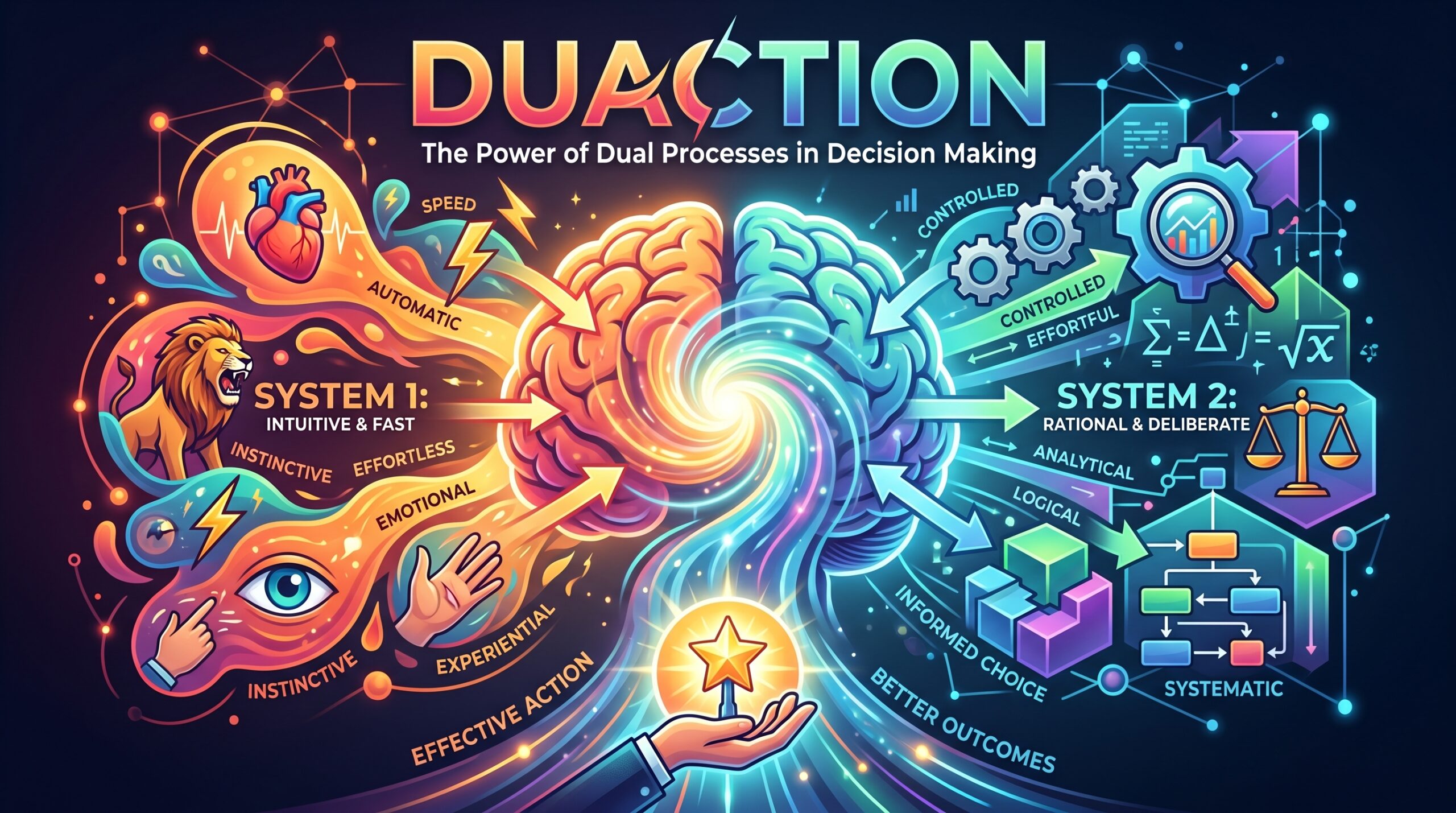
Decision making is a fundamental part of our daily lives. From small choices like what to have for breakfast to significant ones such as career changes, the process can often feel overwhelming. Enter duaction—a fascinating concept that highlights how we navigate these decisions through two distinct mental processes: intuitive and analytical thinking.
Imagine your brain as a dynamic duo working in harmony. One side reacts quickly, drawing on emotions and instincts, while the other carefully weighs options with logic and analysis. By understanding how these dual processes function together, we can elevate our decision-making skills and make more informed choices. Are you ready to explore the power of duaction? Let’s dive into this intriguing world where intuition meets reason!
What is Duaction?
Duaction is a concept that melds two ways of thinking into a cohesive approach to decision making. It combines intuitive and analytical processes, allowing individuals to tap into their instincts while also engaging in careful reasoning.
This duality enhances our ability to navigate complex choices. Instead of relying solely on gut feelings or extensive analysis, duaction encourages a balanced perspective.
The interplay between these systems can lead to more informed decisions. When faced with uncertainty, drawing from both intuition and logic becomes essential for clarity.
By recognizing how these processes work together, we empower ourselves to make better choices across various aspects of life—from personal dilemmas to professional challenges.
Intuitive and Automatic Decision Making
Intuitive and automatic decision making is a fascinating aspect of how we navigate daily choices. This process often occurs without our conscious awareness, functioning like an internal GPS guiding us through life’s myriad paths.
Think about those split-second reactions when you catch a falling object or choose your meal at a restaurant. These instinctive choices rely on prior experiences and emotions stored in the brain. They are quick, efficient, and often remarkably accurate.
This system draws from patterns learned over time, allowing for rapid responses to familiar situations. It’s as if your mind has developed shortcuts that save energy while still delivering effective outcomes.
However, this automaticity can sometimes lead us astray. Biases may creep in unnoticed, impacting judgment subtly yet significantly. Understanding the balance between intuition and reasoning becomes vital for navigating complex decisions effectively.
Analytical and Deliberative Decision Making
Analytical and deliberative decision-making involves a structured approach to problem-solving. This method relies on critical thinking, evaluating evidence, and weighing options carefully.
When faced with complex choices, individuals engage their analytical minds. They gather data, assess risks, and anticipate consequences. This systematic process can lead to more informed outcomes.
Deliberation adds another layer by allowing time for reflection. It encourages considering various perspectives and potential impacts before reaching a conclusion.
This combination fosters thorough understanding rather than impulsive reactions. People tend to feel more confident in their decisions when they have taken the time to analyze all factors involved.
In scenarios where stakes are high or outcomes uncertain, this dual approach proves particularly valuable. Emphasizing logic over emotion helps navigate challenging situations effectively while minimizing mistakes driven by bias or haste.
The Benefits of Incorporating Both Systems in Decision Making
Incorporating both intuitive and analytical systems into decision-making enhances our overall effectiveness. Each approach brings unique strengths, creating a well-rounded perspective.
Intuitive thinking allows for quick judgments based on experience. It can be particularly useful in fast-paced environments where time is limited. This instinctual response often leads to creative solutions that structured analysis may overlook.
On the other hand, analytical thinking digs deeper into details. It fosters thorough evaluation of options, weighing pros and cons meticulously. This method helps mitigate risks associated with impulsive choices.
By balancing these two processes, individuals can harness the speed of intuition while ensuring their decisions are grounded in logic. The synergy between duaction empowers us to navigate complex situations with confidence and clarity.
Embracing both pathways not only improves decision quality but also promotes adaptability in an ever-changing world.
Examples of Dual Process Theory in Real Life
Dual process theory can be observed in daily choices. Think about a time when you quickly decided what to eat versus the hours spent selecting a new car. The first choice ran on intuition, while the latter required careful analysis.
Consider driving. You rely on automatic responses for familiar routes but engage your analytical side when navigating through an unfamiliar city.
Social situations often highlight this dynamic too. When meeting someone new, you might form an immediate impression based on instinctual judgments while also evaluating their opinions and behavior more critically as the conversation progresses.
Shopping offers another clear example. Impulse buys occur without much thought, driven by emotions or advertisements, whereas purchasing a house involves thorough research and weighing various factors such as price and location. This interplay of rapid decisions and thoughtful reasoning shapes our everyday experiences significantly.
Overcoming Biases with Dual Process Thinking
Biases often cloud our judgment, leading to decisions that may not reflect reality. By harnessing dual process thinking, we can counteract these biases more effectively.
The intuitive system acts quickly but can be prone to errors. It’s essential to recognize when this automatic response kicks in. Awareness allows us to pause and reconsider our choices.
Shifting into the analytical mode enables deeper reflection on our thoughts. This deliberate approach requires effort but helps unearth assumptions driving our decisions.
By alternating between these two systems, we cultivate a healthier decision-making environment. It encourages questioning and challenges preconceived notions.
Incorporating both processes fosters a balanced perspective, opening pathways for better outcomes in various aspects of life—from personal relationships to professional dilemmas. Each decision becomes an opportunity for growth rather than a mere reaction influenced by bias.
Embracing the Power of Dual Processes for Better Decision Making
Embracing duaction can transform how we make decisions. By harnessing both intuitive and analytical processes, we create a balanced approach to problem-solving.
Intuition often provides quick insights based on experience. It allows us to respond rapidly in situations where time is critical. However, relying solely on gut feelings can lead to impulsive choices.
Analytical thinking complements intuition by encouraging thorough evaluation of options. This method requires patience and careful consideration but leads to more informed outcomes.
Combining these two systems fosters creativity while minimizing the risk of bias. When faced with complex issues, switching between intuition and analysis enables deeper understanding.
Cultivating awareness of our thought processes enhances decision-making skills. Practicing this duality in everyday choices empowers individuals to navigate challenges effectively and confidently without feeling overwhelmed by uncertainty or pressure.
Conclusion
Decision-making is an intricate process, shaped by both intuition and analysis. Embracing the concept of duaction allows individuals to harness the strengths of dual processes, leading to more balanced and informed choices.
By recognizing when to trust our gut feelings and when to engage in deeper thought, we can navigate complex situations with greater confidence. The synergy between intuitive and analytical thinking not only enhances personal decision-making but also fosters better outcomes in professional environments.
As we continue to explore this powerful approach, integrating both systems into our daily lives can lead us toward clearer paths and smarter decisions. Understanding and applying duaction opens doors for improved judgment that benefits everyone involved.